
Everyday People
Laurel Canyon's civilians and stars were at first largely indistinguishable--until one day they weren't.

Crystal Brelsford moved to Los Angeles in 1968 from Sugarbush, Vermont in the company of her boyfriend, Waddy Wachtel, and his band, Twice Nicely. The rock-and-roll business had by then evolved to the point that the money made by cranking out pop pap could now be reinvested in a legitimate rock band, no matter how obscure, which had the effect of cleansing the funds and, as often as not, providing a handsome return. Thus was Twice Nicely taken under the wing of William “Bud”Cowsill, patriarch of the wholesome family singing ensemble then cresting with an excruciating hit version of “Hair,” from the Broadway “hippie” musical. Cowsill installed the band in a house in Benedict Canyon, and Brelsford was given a job in the Cowsills’ offices. Twice Nicely turned out to be one of the many bands of the ‘60s that, given one more piece of luck, might have thrived; instead, they disintegrated after Bud Cowsill moved them to L.A. (Wachtel would go on to become the compleat L.A. rock session guitarist and a mainstay on records and tours by Linda Ronstadt and Warren Zevon, whom Brelsford would marry in 1974 and divorce in 1979.)
Having tenuously separated from Wachtel after the band’s demise, Brelsford relocated to a house near the top of Lookout Mountain that she shared with an airline stewardess and another young woman, both utterly straight. It was a measure of the times that when Wachtel’s brother Jimmy, an aspiring graphic artist, and Twice Nicely’s rhythm guitarist found themselves at loose ends, they simply moved into Brelsford’s not overly large room, which was furnished with a double bed and a twin. The latter was so uncomfortable that on alternating nights WachteI or the guitarist would share the double with Brelsford. Though she was baving sex with neither, the apparent ménage scandalized her housemates. Their horror deepened when Wachtel and the guitarist began bringing home emphatic young women picked up in their nightly trawls at the Whisky—”go-go girls, Plaster Casters, and all that,” Brelsford told me, “these strange people with tutus and feathers”—and bedding down with them in her already crowded billet. When Brelsford’s mother arrived for a visit, “I had to get everybody out in the nick of time.” She was nineteen.
In those days it was still possible for an unknown to commingle with and be taken seriously by someone like David Crosby—who had already burned through one seminal band and was about to form another in Crosby, Stills & Nash—because the scene was still evolving around fresh recruits. L.A. in the late 1960s represented one of those periodic cracks in the pop-cultural fortress when outsiders are not only tolerated but welcomed.
Brelsford was raised in Aspen, Colorado. “I came from the straightest possible background, with these wonderful, almost Steinbeckian parents. The ‘60s arrived in Aspen, as they did in most American towns, via the radio and record store. “I remember a guy named Mark Selzer walking into the Matthew’s drugstore back room and he had Dylan’s first album. So I invited him home with me because I had a hi-fi.” Aspen was hardly Dubuque; the Aspen Institute, founded in 1950 by a high-minded Chicago businessman named Walter Paepcke as a retreat for leading lights of the humanities, had given the town gobs of international cachet. By the time Brelsford met her Dylan-toting hobo, Aspen had been overrun with longhairs and a new generation of literary stars like Hunter S. Thompson and the novelist and screenwriter James Salter. So Brelsford wasn’t entirely unprepared for life on Lookout Mountain. “I’d grown up in a town where it was pretty bizarre all the time. I always thought I was from the only ‘normal’ family in town and I hated it. My life just wasn’t exciting.”
Brelsford began to understand the implications of Los Angeles when she walked into a supermarket and saw Jack Lemmon buying lightbulbs. “Everywhere you looked it felt like someone famous was there. And it seemed attainable.” Indeed, less than a week after hitting town, she and Wachtel found themselves sitting three tables away from David Crosby at the Olde Worlde restaurant on Sunset Boulevard. Wachtel screwed up his courage, introduced himself, and invited Crosby to come see the band. In those days in Los Angeles it was still possible for an unknown to commingle with and be taken seriously by someone like Crosby—who had already burned through one seminal band and was about to form another in Crosby, Stills & Nash—because the scene was still evolving around fresh recruits like Wachtel. L.A. in the late 1960s represented one of those periodic cracks in the pop-cultural fortress when frustrated geniuses from the hinterland are not only tolerated but welcomed.
“You had Paris in the ‘20s, Hollywood in the ‘60s,” Kim Fowley, a Los Angeles native and fringe record business entrepreneur later to manage the Runaways, told me. “And you really wanted to be there because those places had hope. If you could get the bus ticket to get to paradise, even if you were a waiter, at least you were there.” And L.A., Fowley stresses, “was wide-open. Anybody who had charisma or a line of bullshit could walk into any record label and get a deal—maybe just one record, but that’s how it worked.”
Wachtel had the chops and, more important, an advocate in Crosby, who had great ears—he’d “discovered” Joni Mitchell playing in gaslight clubs in Coconut Grove, Florida following his dismissal from the Byrds. Now he was back in L.A. bucking up another unknown. “Crosby really mentored Waddy’s band, like telling them about not selling their publishing, which he had learned the hard way,” Brelsford told me. “We became friends with him. I drove to Aspen and got this great dope and sold it to him and [Stephen] Stills. There was a sense that you could touch fame.” Wachtel and Brelsford became friends with Brian and Marilyn Wilson and were invited to the Beach Boy’s house on Laurel Way in Beverly Hills. Wilson had by then reached near-mythical status in the music industry but was also close to a breakdown abetted by his drug intake. “I remember sitting next to him on the couch and all of a sudden he’s rubbing my leg and asking if he could shave my leg,” says Brelsford. “And I was on acid. I was like, Oh, my God, I have to get out of here. Somehow the image of Brian Wilson shaving my leg...”
“Crosby really mentored Waddy’s band, like telling them about not selling their publishing, We became friends. I drove to Aspen and got this great dope and sold it to him and Stills. There was a sense that you could touch fame.”
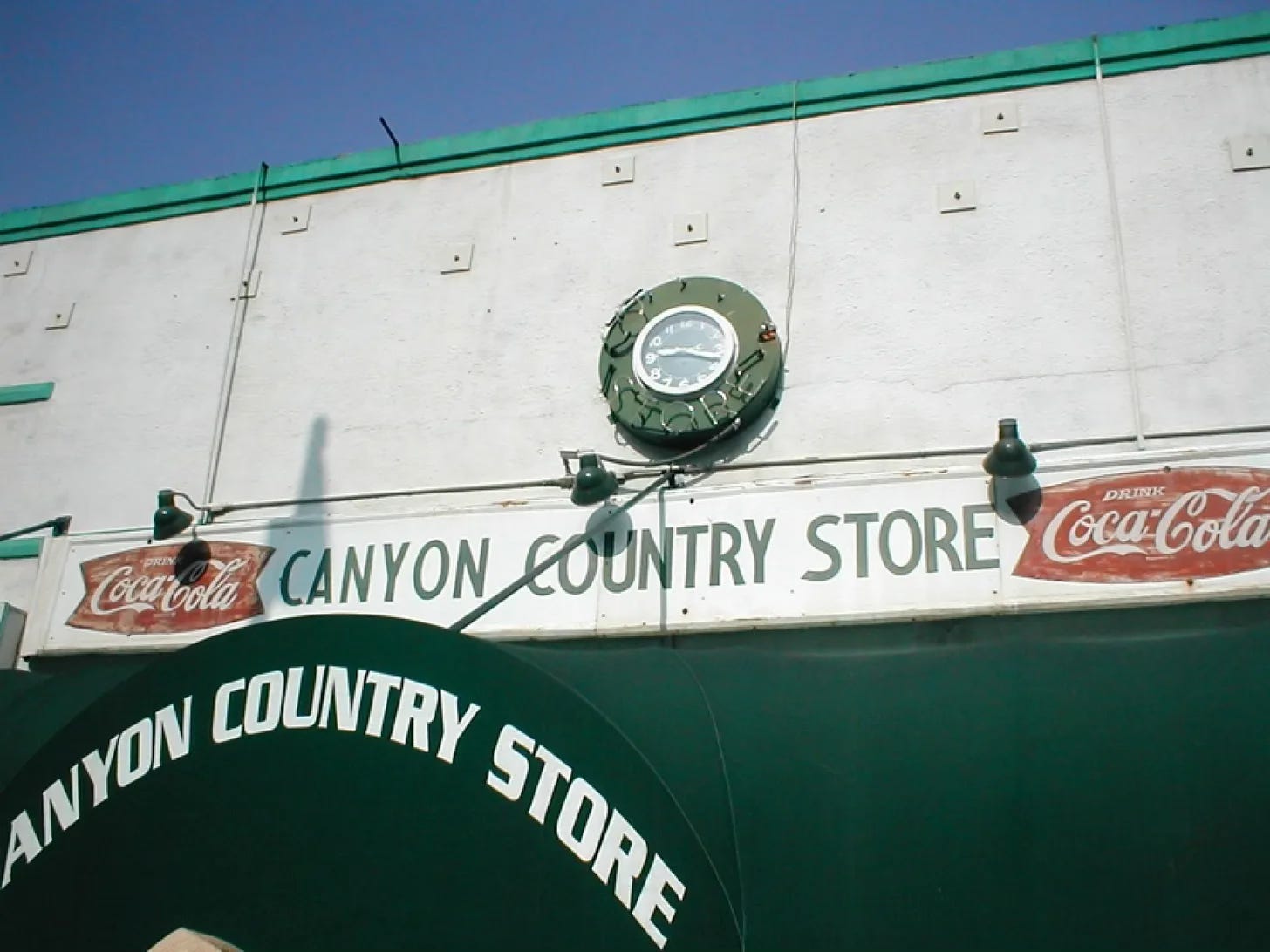
A more typical consequence of the rampant consumption of psychedelics in the canyon—”We were dropping acid at least once a week,” Brelsford marvels—was a gentrified laissez-faire known as “going with the flow,” from the koan by Zen master Hsu Yun: “Going with the flow, everywhere and always.”“I’d been to [Richard] Alpert [and Timothy] Leary’s lecture at the Cooper Union in New York before I ever took acid, so I knew about imprinting and the first bardo and all that stuff,” Henry Diltz, an accomplished folk musicians and, later, the canyon’s court photographer, told me. “We used it very much as a tool to explore the outer realms—or inner realms—that you couldn’t get to otherwise. At the same time, I was reading the autobiography of Paramahansa Yogananda, which gives you a whole new outlook, not hocus-pocus spiritualism but the wonder of everyday life and how beautiful it all is. Each day would kind of take off on its own. Everything would lead to something else. You’d go down to the Canyon Store and bump into somebody, and they’d say, ‘I’m up on Kirkwood, we’re writing a song, why don’t you come over and smoke a joint, and someone else would come by and say, ‘Hey, we’re going down to this club later’...It was like anything could happen, and you just kind of followed your nose.”
One night in 1966, Diltz dropped acid with friends at his place on Lookout Mountain. (He had impulsively bought the house after receiving an unexpected $2,000 check from Warner Bros. Records; Yogananda would have been pleased.) “I was still working on this Alpert-Leary thing: you take [acid] and it’s going to interrupt your imprinting and so you want to go with the flow and I couldn’t do that carrying on with roomful of friends so I went up the hillside and just sort of sat there under the trees. There was this bzzzzz bzzzzz of mosquitoes, and I remember thinking: ‘Okay, little brothers, I grant you being, you have every right to be here, but you may not bite me, just you go your way, I’ll go mine.”’ All at once Diltz heard “this amazing music” wafting through the air. “It just grabbed my ears and pulled me up and I followed this physical wave down the hill and across the road and up to another house.” Diltz looked inside and beheld a ring of candles on the floor. “This beautiful black girl Cynthia was sitting there—I knew her, she was a go-go dancer at the Whisky.” He knocked on the window and she invited him in. “And I remember—I was totally peaking on this psychedelic—she showed me this album cover. It was Rubber Soul, and then hearing the music—‘turn off your mind, relax and float downstream’—and I’m like, ‘Oh, my, God…’”
Still, behind the canyon’s woozy serendipity lay the fact that money and fame would be made available to only handful of aspirants, no matter how much or how little they cared about “making it” or how completely they bonded on someone’s redwood deck over guitars and Maui Wowee. “There was an underlying competitiveness that was going on [in the canyon] that nobody talked about because it was peace and love and everyone was brothers and sisters,” Brelsford told me. “But the ‘big break’ was always coming. And you were always seeking the bigger one. It was like: ‘Well, they’ve got this record deal and our music is better, so why aren’t we..?”
The big break never came for Wachtel’s band. The first time he heard them play, Crosby pulled the young guitarist aside and told him, “The band sounds really good, but you are the only one in it. You know that, right? You’re the only musician in here.” Diltz’s Modern Folk Quartet, with its embarrassment of musicianship, never managed to make the transition that blasted the Byrds to fame. Diltz insists it didn’t matter, that he was more interested in “the thrill of making really cool music and trying to blow somebody’s mind. I wasn’t thinking: I gotta make it; I gotta get a bigger house and a bigger car. Not at all.”
In the canyon’s supposedly casteless society being stitched together by young baby boomers outside the cultural mainstream, talent for the moment replaced money and station as the key to accessing an inner sanctum that supposedly did not exist. But it did. “There was a certain elitism that went on.”
“I don’t know if they wanted to make the big time in terms of making a lot of money,” says Ron Stone, then an apprentice at Lookout Management, which guided the careers of Joni Mitchell, Crosby, Stills & Nash, Neil Young, and, later, Jackson Browne, America, and the Eagles. “It had more to do with power and connections to the political situation, Crosby in particular. The whole thing was about the change that was going on in America. The bigger we were and the more influence we had, the more we could change radio, the more we could change the politics. It was later on the money became a big issue.”
In the canyon’s supposedly casteless society being stitched together by young baby boomers outside the cultural mainstream, talent for the moment replaced money and station as the key to accessing an inner sanctum that supposedly did not exist. But it did. “There was a certain elitism that went on,”’ Brelsford recalled. “There were cliques, and I don’t think anybody would have said that that was the case then, but you definitely sussed out what was the best thing happening, who was going to be the best group of people congregating where. No one was going to let anyone too far in until they were sure you were okay. Even [Turtles singer] Mark Volman, who was my neighbor, we’d chat and we were friendly, but he was cautious.” All it took to break in was talent, knowing someone who was talented, being a beautiful young woman, or, if all else failed, Brelsford told me, “dealing really good dope.”
Volman moved to Laurel Canyon in 1965 from the Los Angeles beach town of Westchester, where he’d been a founding member of the Crossfires, a surf band firmly in the Vitalis-and-”Miserlou” camp. The Beatles inspired the Crossfires to grow their hair and start singing; Volman and bandmate Howard Kay-lan, former tenors in Westchester High’s a cappella choir, were amply qualified. A name change (“Turtles,” in smirking emulation of “Byrds”) and a record contract were followed almost immediately by “It Ain’t Me Babe,” a Top 10 smash in 1965 culled, like “Mr. Tambourine Man,” from the apparently bottomless Bob Dylan songwriting catalog. “When ‘It Ain’t Me Babe’ hit, it just changed everything about our lives,” Volman told me, “and so moving up into [Laurel Canyon] was the natural step.”
Volman’s house, on Lookout Mountain, purchased for $40,000 in 1967, included a half acre of property and the de rigueur legion of musician neighbors. “Jim Pons of the Leaves was right next door to me. Down the street was Joni Mitchell, Frank Zappa. As you went up Lookout, you had Paul Williams, Joe Schermie of Three Dog Night, Robby Krieger and his wife were very good friends; Danny Hutton of Three Dog Night was probably our closest family friend—he was best man at my first wedding. Henry [Diltz] lived right across the street. I remember several nights that Joni Mitchell held a kind of court at her house with many of the young writers that were coming through—Jackson Browne, J.D.Souther— a plethora of songwriters passing the guitar around and singing the things they were working on.”
The Turtles had already been through the pop-star wringer by the time Volman and Brelsford became neighbors on Lookout Mountain. Their enormous hit “Happy Together” was one of the great pop-rock songs, but it soon served to undermine the band’s tenuous folk rock-psychedelic cred. “Happy Together” notwithstanding, the L.A. rock scene was exploding so quickly that fame had not yet been bifurcated into cool and uncool—although those days were coming, and soon. For the moment, there was no stigma attached to hanging out with Micky Dolenz, of the Monkees, at his Lookout Mountain house. “It was very egalitarian,” Graham Nash told me. “Everybody would hang out with everybody: ‘Oh, you’re the drummer from the Monkees? Here, have a hit of this.’ There wasn’t a star thing going on even with the stars.” On the other hand, as Nash put it, “I never felt any competitiveness, because how the fuck do you compete with Crosby, Stills & Nash? What do you do to top that?”
The L.A. rock scene was exploding so quickly that fame had not yet been bifurcated into cool and uncool—although those days were coming, and soon. For the moment, there was no stigma attached to hanging out with Micky Dolenz at his Laurel Canyon house. “It was very egalitarian,” Graham Nash told me. “Everybody would hang out with everybody: ‘Oh, you’re the drummer from the Monkees? Here, have a hit of this.’”
These subterranean currents, impossible to articulate and thus never acknowledged, barely made a ripple in the canyon. “There was a community there, but I don’t know how real it was,” Brelsford told me. “In spite of the times being about peace and love and openness, the less emotionally available you were, the cooler you would be. Celebrity of course lends itself to that, which was a contradiction to what people were espousing: we’re all equal, you’re my brother, together we can change the world. There were places where that was the sense, but I don’t think it was in Laurel Canyon.”
As these discomfiting social agendas evolved, the canyon still offered the compelling daily pleasures of leafy surroundings, unstructured lives, and the omnipresent fog of marijuana. “Everybody would be in the living room with the stereo turned up full blast and the wine-bottle candle burning over the spool coffee table,” says Brelsford, “Every now and then someone would try to get the candle to drip where it needed more wax. We’d pass around the joint. Someone would say, ‘Wowwww.’ Or somebody’d say they were hungry, and we’d drive downtown where they made bagels and you could go at five in the morning and get them hot.” Fowley sneers at the hindsight of “beautiful sunsets, lovely mornings with the succulent smell of jasmine, the meadows golden, the dreams never ending.”’ But even he turns wistful at how seriously the average canyon stoner took what Crosby made a fetish of calling The Music. “In those days when certain songs would come out, people would actually have listening parties, and they’d sit around the record player and smoke dope. When ‘What a Day for a Daydream’ came out, there was a party at somebody’s house. People would dress up in their bangles and leather and buckskin and bring food and you’d sit there like it was a religious experience—like Howard Dean was coming to your living room in New Hampshire—and they’d play the damn thing for five hours. Then they’d have discussions about it.”
As the canyon lurched toward the end of the 1960s, another wrinkle appeared in the social fabric: families. Volman was married in 1967 and had a child the same year. His house was conveniently situated across the street from Wonderland School—a quirk of the ever quirky canyon was to have its own grade school pitched up high in the hills of Lookout Mountain. “Most of the pop friends I had in ‘67 were people who did have family,” Volman told me. “The Zappa family, the John Phillips family. I was a family man, raising kids.” Ron Stone’s and Carole King’s children—she lived nearby on Appian Way—together attended the hippie-dippie Center for Early Education off Melrose Avenue.
Brelsford soon acquired a family herself, though in the custom of the canyon it was hardly traditional. She and Wachtel had split—he had moved in with Twice Nicely’s singer, Judy Pulver, in a house just up Lookout—though Brelsford continued to have sex with him. Their nebulous “open” relationship, the acid trips, the careening lifestyle, were beginning to wear—although she couldn’t bring herself, in the argot of the day, to cop to it. “I got scared sometimes by what I was doing. I look at it now and say, ‘What I really wanted was a monogamous traditional relationship,’ but I couldn’t say that. I’ve talked to a lot of women my age who were in their early twenties in those years, and the truth is what we all wanted was the same thing: we wanted him, the right man, we wanted children, we wanted marriage. That’s not how we were behaving and that’s not what we were saying in front of our boyfriends, but that’s what we wanted. We were far from being liberated women; we had hidden agendas. I didn’t want to be doing the stuff that I was doing, but I wouldn’t admit that even to myself. There’d be moments—rare moments—when I’d actually have time alone, and I’d cry into my pillow.”
Despite the atmosphere of fey liberation wafting through the canyon, women were reminded daily of their place on the sexual-power continuum. “Anybody, including myself, got offered money for all kinds of sexual favors constantly,” Zappa’s wife, Gail, told me. “Those were the days you got fired if you didn’t give your boss a blow job; you kept your job by returning sexual favors that were completely unwarranted. So everybody was always suspicious of anybody who had a real job and was halfway decent-looking.” Some young women on the scene—dubbed Organ Grinders—practiced a form of low-key prostitution by simply sticking their thumbs out on the Strip, where it was well known that men trawled for female hippie hitchhikers who would sexually service them in exchange for cash.
Despite the atmosphere of fey liberation wafting through the canyon, women were reminded daily of their place on the sexual-power continuum. “Anybody, including myself, got offered money for all kinds of sexual favors constantly,” Frank Zappa’s wife, Gail, told me. “Those were the days you got fired if you didn’t give your boss a blow job; you kept your job by returning sexual favors that were completely unwarranted. So everybody was always suspicious of anybody who had a real job and was halfway decent-looking.”
Brelsford moved to another house on Lookout Mountain, this one recently vacated by the composer Paul Williams, then raking in his first serious money and taking his leave in a diaspora that would accelerate as success bled the canyon of its first wave of stars. Brelsford babysat a young boy and girl whose mother had committed suicide. Their father was about to put them in an orphanage when she stepped forward and said she would raise them. It speaks to the times that she was able to keep the children without any legal formalities; she simply moved them in with her at Williams’s house and enrolled them in Wonderland School. “So I’m like twenty-one with a six- and an eight-year-old child all of a sudden.” It was an act of naked, unambiguous selflessness, and it inspired an outpouring of support from the canyon that Brelsford recognized in hindsight was colored with generational self-congratulation.“They liked that—I was the perfect hippie then. I was this skinny little waifish hippie girl with two orphaned children.” Brelsford cobbled together part-time jobs while her parents—who weren’t wealthy—sent money. Her first Christmas with the children, she says, “I was absolutely broke. Cindy, the eight-year-old, wanted to play guitar, and all these people from Laurel Canyon started bringing presents, and we got together the money to get a guitar. We covered up the guitar with all these presents, and in the morning these kids get up—they had come from a nightmare situation before they came to me—and to this day they remember that Christmas.”
For Brelsford, the canyon’s support was casual evidence that hippie ideals could sometimes transcend the narcissism she shrewdly glimpsed behind the love beads and tie-dye. ”The thing that sometimes seemed superficial was at times very real.” After she could no longer afford to live in the canyon and had moved herself and the children to an apartment in the flats of Hollywood, her neighbors, some no doubt stubbing out a joint before they made the necessary calls, fixed it so the children could continue attending Wonderland School. It was an affirmation that the canyon cared for one of its own who had sampled the hedonistic and altruistic possibilities of the counterculture and found the latter just as compelling. It’s instructive to remember, as Brelsford does, that in a milieu so steeped in self-styled mystique “there were those people there, too.”
Thanks for that! Those scenes sprang up everywhere, it seemed, during the '60s and '70s where there were cheap rents and willing participants. It continued in the '80s and '90s in Hollywood, Athens, Seattle, Olympia, Chicago, the Lower East Side, Williamsburg, Minneapolis and many other locales. It would seem to be less prevalent now, and the causation between the rise of the web and social media as the default explanation is tempting but perhaps flawed. What has definitely changed is a hollowing out of the marketplace where musicians could earn a decent living playing live and self-publishing their work, once distribution changed from physical recordings to streams, among other negative factors, that have collectively discouraged the development of new scenes even in the few places where the cost of living is reasonable...
Really interesting in so many ways. You cover so much ground here that's relevant to that era and not only to Laurel Canyon. It especially takes me back to the bizarre situation in which women were winning more rights and yet actually losing real power in certain ways at the same time. You've captured that dynamic very well.