
Gary Kellgren's Working Party
The co-founder of the Record Plant studios in New York, L.A. and Sausalito imbued his facilities with an ethic of hard work and hedonism--until the latter caught up with him.

On July 20, 1977, Gary Kellgren was found floating in the swimming pool at his mansion overlooking the Sunset Strip in Los Angeles, dead from what was later ruled an accidental drowning.
It was an ignominious if on-brand demise—Brian Jones of the Rolling Stones had similarly perished in 1969—for one of the most influential recording engineers and entrepreneurs of the rock era, whose career, spanning the peak years of the 1960s and 1970s recording scenes in New York and Los Angeles, changed the ways and means of capturing rock music for both studio professionals and for the musicians making it.
With business partner Chris Stone, Kellgren launched the original Record Plant in New York in 1968. Apart from its state-of-the-art sonic accoutrements, the studio was an immediate hit for its explicit rejection of the lab-like ambience of traditional facilities where rock and roll was an increasingly bad fit. The Beatles captured the unprecedented surreal soundscapes of Sgt. Pepper’s Lonely Hearts Club Band mostly in spite of the primitive four-track tape machines at EMI’s Abbey Road studios in London, the fluorescent-lighted spaces therein as suited to creative endeavors as an embalming theater. “Every wall was painted a nauseating hospital-like pale green,” recalled Geoff Emerick, who engineered Sgt. Pepper and much of the Beatles canon there. It is a testament to the band’s pluck that they managed to render such felicitous music amid such unrelenting surroundings.
Kellgren’s vision for the Record Plant was a studio that combined the comforts of a Hugh Hefner-style crash pad with the very latest in acoustic design; unsurprisingly, the concept received a rapturous reception from artists who could finally record in an environment that aligned with the lifestyle adventures they were inventing on the fly in the Haight, Greenwich Village and Laurel Canyon.
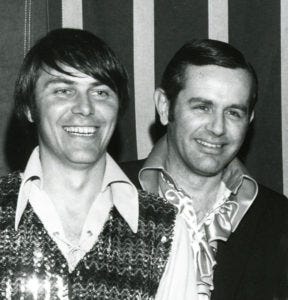
“He singlehandedly was responsible for changing studios from what they were – fluorescent lights, white walls and hardwood floors – to the living rooms that they are today,” his partner, Stone recalled. “His feeling, more than anyone else's, was that a studio should be a comfortable place to record.”
Before he commissioned Electric Lady, the New York studio inspired by the Record Plant that opened shortly before his death in 1970, Jimi Hendrix would frequently alight there for all-night sessions while recording the landmark Electric Ladyland and its epic live-in-the-studio “Voodoo Chile” jam session comprised of a pick-up band including Steve Winwood, Hendrix drummer Mitch Mitchell and the Jefferson Airplane’s bassist Jack Casady.
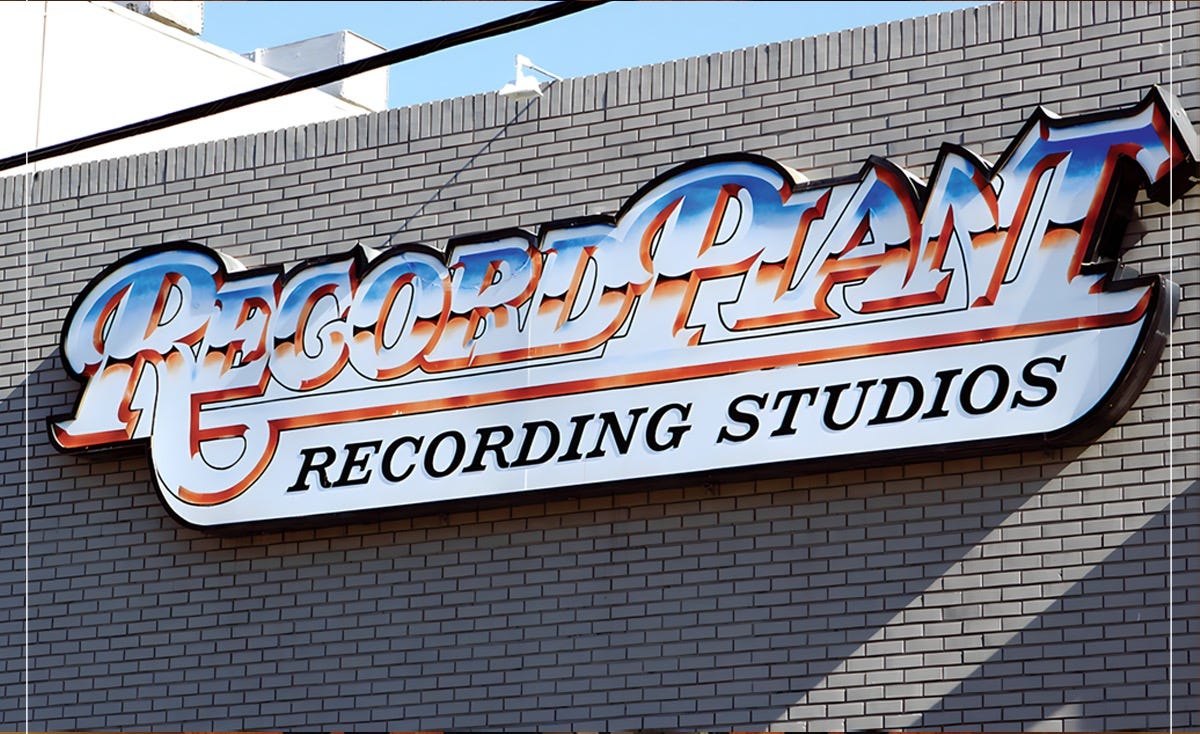
Once established, the Record Plant became the recording studio of choice for rock and pop royalty, including Aerosmith, Bruce Springsteen, and most famously John Lennon, who was shot to death in 1980 returning home from the studio after a mixing session for a song titled, with murderous irony, “Walking on Thin Ice.” But Kellgren’s vision for the studio truly came into focus with the opening, in 1969, of the Record Plant Los Angeles, which became a fixture at 3rd Street and La Cienega before moving to 1032 Sycamore Ave in Hollywood in 1985.
Epic Records staff producer Tom Werman recorded Cheap Trick’s power pop classic In Color there in 1977 and subsequent albums by Motley Crue, Poison and other L.A. rock stalwarts. The studio left a lasting impression.
As Werman later recalled…
There was a jacuzzi room at the Record Plant that could be reserved by clients on an hourly basis. It had a big redwood tub that was sunk into the floor, a sofa, a coffee table with a glass top that was perfect for chopping out lines of coke…If this wasn’t enough (and in the age of excess, what was enough?), each of the three studios had its own private lounge. Most nights you would find a few unattached males who’d show up and work their way into the after-hours group in the hope they’d be offered a couple of lines. Even luckier were the girls who would show up in pairs, dressed to kill, who mixed, mingled, and flirted. The poor guys with the powder would supply these girls with liberal amounts, hoping to be rewarded at the end of the evening…
The Record Plant West, as it came to be known, became the de facto premier recording facility on the West Coast—the foundation tracks for the Eagles’ Hotel California were recorded there, along with Stevie Wonder’s Songs in the Key of Life, Guns N’ Roses’s Appetite for Destruction and swaths of Fleetwood Mac’s drama-strewn masterpiece Rumours, the balance of which was put to tape at the Record Plant’s latest outpost, in Sausalito, which had opened in 1972.
The success of the Record Plants across three cities and two coasts mirrored the record business as it exploded from cottage industry to multinational colossus, when the hits and money and good times, fueled by a blizzard of cocaine and fate-tempting hubris, seemed as if they would never end. By the mid-seventies, like so many of his contemporaries, Kellgren had succumbed to the era’s excesses; for an enterprise founded on providing spaces where work and recreation could coexist simultaneously, it was practically pre-ordained. “It was all about a big party for him, as well as working,” an engineer at the Sausalito Record Plant told music journalist Richie Unterberger. “He seemed to put those two together. That’s why the studio was built.”
In 1977, Los Angeles photographer David Strick, on a magazine assignment, spent a night with Kellgren at his mansion above the Sunset Strip. “The reason the magazine was doing a story on him was because he’d become sort of a casualty of the scene, even though he had a ton of money,” Strick told me. “He’d become just completeby dissolute and fucked-up.”
Strick hung around Kellgren’s faux-Norman castle for a single night and was struck by the dreary procession of decadence that by then landed as if scripted…
“He had this sicko entourage that just kind of came by and brought him drugs. All kinds of music-fringy people. He was still working—he took us to a Frank Zappa session at the Record Plant that he was supervising at five in the morning. Around midnight a couple of long-haired Samoan guys came to the castle and dropped off a pretty large amount of cocaine, which as I remember was wapped in condoms, because Gary Kellgren put one through his belt loop for the rest of the night.
Months later, when Strick’s photos were about to run, he got a call from the New York Post. Kellgren had just been found floating dead in his swimming pool, and the newspaper wanted Strick’s pictures. “It was this sense of one of those typical Brian Jones endings to one of these ’60s people’s lives in the ‘70s, when his string got played out in that scene. It was a very intense, one-night exposure that I got to it.”
Today, nothing remains of Kellgren’s recording empire except its legend and the albums recorded in its facilities. Stone sold the New York and Sausalito Record Plants, which closed in 1987 and 2008, respectively (the redwood-clad Sausalito studio, since renamed, remains active.) The Los Angeles Record Plant hung on all the way to 2024 before finally shuttering for good, a victim of budget-busting tech that makes large studios dispensable five decades after the heady days when art, commerce and an in-house Jacuzzi conspired to make so much beautiful music together.
Funny that Hollywood still hasn’t learned that drugs and large standing pools of water don’t mix.
Thanks for this great story.