
Letter from Laurel Canyon Interview: Erin Osmon, 'Won't Back Down'
The journalist discusses her new book about the culture and politics of heartland rock pioneered by Bruce Springsteen, Bob Seger, John Mellencamp, Tom Petty and others.

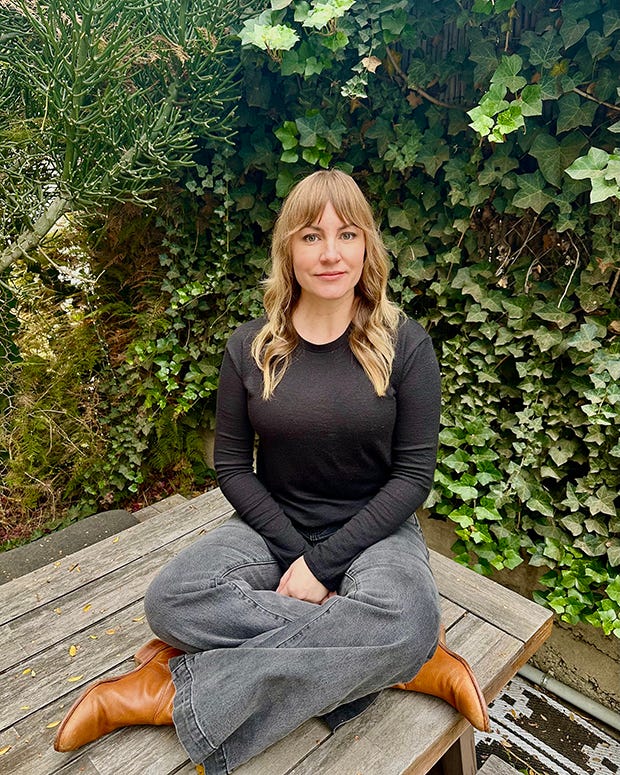
A music journalist, critic, and author of books on John Prine and Jason Molina, Erin Osmon’s writing has appeared in the Los Angeles Times, New York Times, and Rolling Stone. She won the Deems Taylor/Virgil Thompson Award for album notes in 2023 and several Los Angeles Press Club Southern California Journalism awards. She lives in Nashville. Erin and I spoke at length about her new book, Won’t Back Down: Heartland Rock and the Fight for America (W.W. Norton & Co.), published April 28th. Following are highlights from our conversation….
What exactly is heartland rock? Does it have to originate in the American midwest to count?
An argument I emphasize in the book is that heartland rock was the last gasp of American greatness in rock and roll. And when I say rock and roll, I mean mainstream rock music written with adult audiences in mind. When we get into the 90s, there’s certainly great rock music—grunge and alternative, et cetera—but that’s all youth culture. So heartland rock is an assertion of American greatness in rock and roll and left-wing progressive populism. I explored it as an ideological geography rather than a literal one. People get hung up on this idea that it has to be from the middle of the country. By most metrics, Bruce Springsteen is the king of the genre and he is from New Jersey, which is decidedly not in the heartland. So I looked at it as an ideological or spiritual geography that sits at the intersection of class and politics. And that helped me set some parameters around who I would include.
The book’s principal characters comprise Springsteen, Tom Petty, from Florida, Bob Seger, from Michigan, and John Mellencamp, from your home state, Indiana. Why those four?
The Mount Rushmore of Heartland Rock, I think, is widely accepted as these four men. Bruce Springsteen sort of inspired this entire wave of artists and sounds and music. But Bob Seger deserves more recognition as being an originator. His importance for creating a bridge between populist rock movements has been overlooked, because he was working for a really long time before he hit. So I think it’s important to recognize that. Tom Petty is from Florida and went to L.A. to make it. But he certainly brought a populist lyrical spirit and themes to the particular kind of rock music that he was making, and he was sort of cooler than these other guys. I view him as sort of the misfit, the stoner little brother. John Mellencamp is someone who could be an incredible mascot for this thing, just by virtue of the fact that he has always lived in Indiana and saying he’s explicitly for and about farmers. against racism and redlining. But it took him a little bit longer to find his voice, and he had the unfortunate origin story with [David Bowie manager] Tony Defries and being saddled with being Johnny Cougar and all of that. So, they’re sort of the center.
“Heartland rock was the last gasp of American greatness in rock and roll and left-wing progressive populism. And when I say rock and roll, I mean mainstream rock music written with adult audiences in mind. People get hung up on this idea that it has to be from the middle of the country. By most metrics, Bruce Springsteen is the king of the genre and he is from New Jersey, which is decidedly not in the heartland.”
You also acknowledge a wider circle of artists, everybody from regional bands that never quite broke nationally, like Cleveland’s Michael Stanley Band, to Bruce Hornsby and, in Canada, Bryan Adams and Tom Cochrane.
I also look at the progenitors, the people they were inspired by all the way back to Woody Guthrie and Bob Dylan to CCR and The Band. Also Bonnie Rait, Jackson Brown, the folks in the mid 70s, and the women who should be considered a part of this more than they are: Melissa Etheridge, even Tracy Chapman. And then I wanted to look at their allies and the idea that heartland rock was a loosely interconnected movement, which I believe it was. If we look at events like Farm Aid or No Nukes, we can see the “core four” [Springsteen, Seger, Mellencamp, and Petty] and their allies coming together under the spirit of resistance or populist alliances.
That’s a pretty big tent.
It is a wide cast of characters. But when you get into the details, you see that these folks were playing on each other’s albums, they were playing shows together, benefits, they were touring together. The Heartbreakers backed Bob Dylan. There were all these points of connection that I think were important to emphasize, because it’s easy to see the core four like these monolithic, untouchable men, but really, they were quite accessible to their peers and the people that they were inspired by.
You write that heartland rock is characterized by ‘inclusive populism.’
I think populism has been co-opted in a pretty pernicious way. As it was originally intended, it was referring to what today we would call the 99 percent. So it’s a term that was supposed to cut across gender, race, ethnicity, even religion in the United States. I think that was the spirit of this music, too. For better or for worse, it has been remembered as a mostly white movement, a mostly male movement. But I wanted to sort of issue a narrative correction around that as well, in terms of who it was advocating for and who it included.
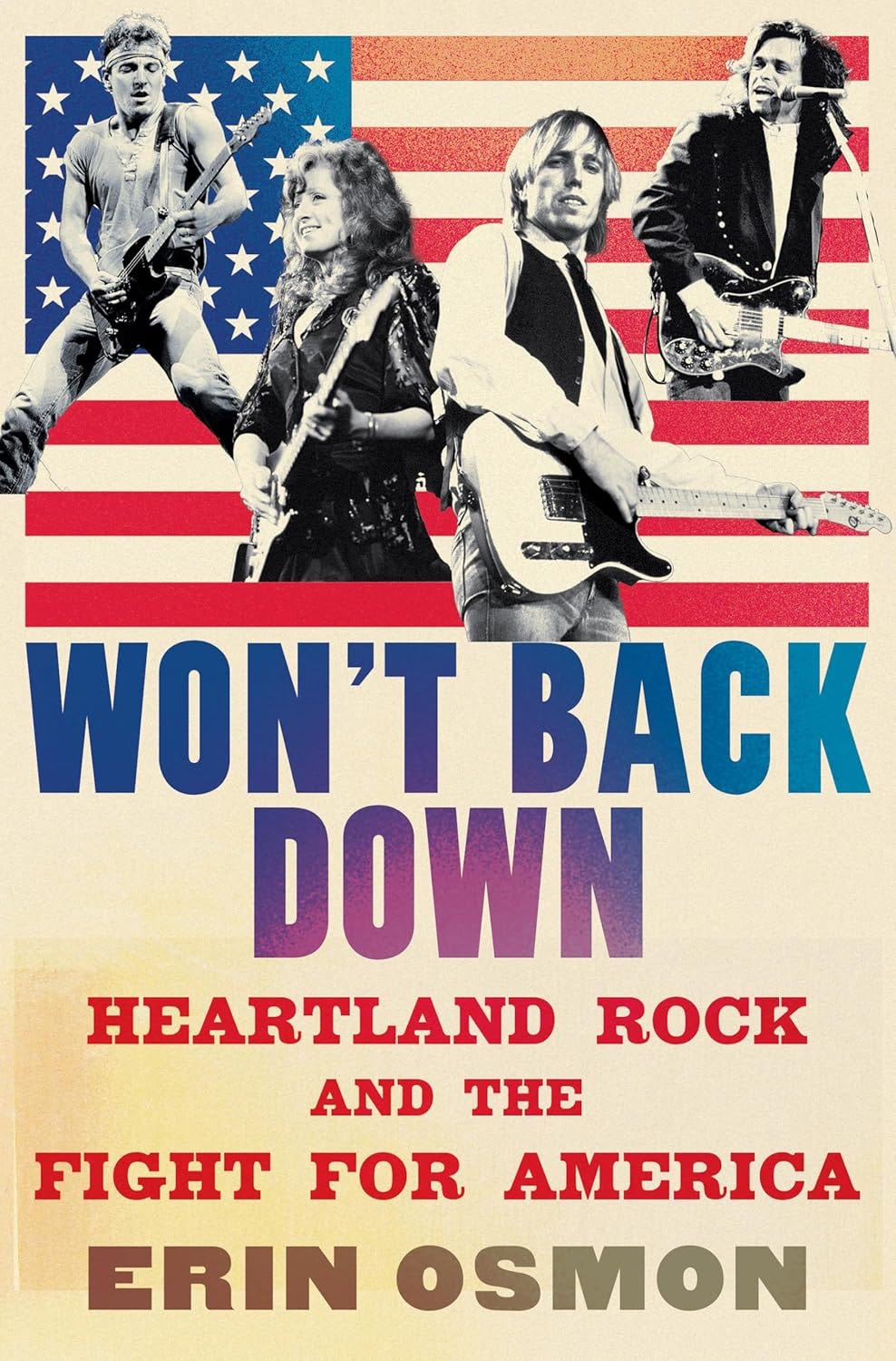
The book points out that throughout the 1980s, there was strong resistance to the Reagan administration’s policies by a large swath of popular musicians, particularly among the heartland rock crowd. And, just as today, their music was appropriated by right-wing politicians to promote an agenda their songs sometimes explicitly rejected, such as Springsteen’s “Born in the USA.”
Reagan was not a dumb guy. It is very plausible that Reagan and his team understood the meaning of the song “Born in the USA,” but they also understood that when they clipped out the chorus and the tremendous emotional response that it elicits in a listener, they could use it for their purposes. And it worked. Same with the American flag image. Like Bruce’s denim-clad ass in front of an American flag on the [Born in the USA] album cover was meant as more of a critique than it was received. I tried to echo that on the cover of my book with the use of the American flag triggering notions of, who does this belong to? And who thinks that they own it? And really, the answer to that question is it belongs to everyone. But unfortunately, that’s not how it is today.
The lyrics of Mellencamp’s “Pink Houses” were similarly subverted as shorthand for returning America to conservative values of the 1950s.
That is a song that was explicitly written about redlining and anti-racist sentiment and about the hypocrisies of the American dream and how it’s not a level playing field across populations in this country. The problem is that these songs are so simple, and so they’re easy to glom onto in different ways, and they’re easy to kind of remix in your heart and mind based on your personal biases. Their anthemic qualities and the simplicity of the lyrics and the instrumentation also made them problematic, because it was very easy to co-opt them. Tim Walz attempted to correct that when he was running for vice president and used [Mellencamp’s] “Small Town” at campaign events. But largely because of right wing politicians using these songs on campaigns they’ve been unfortunately aligned with that movement as well, so that was a part of the book, to try to issue a narrative to correct that.
Heartland rock is credited with playing a role in redefining country music.
Mainstream country music has adopted some of the sonics of the genre, and they sort of cherry pick, maybe from the populist lyrics, but it’s not as politically obvious. Even though folks like Luke Combs covered Tracy Chapman’s “Fast Car” and made it a hit on the country music charts. That began happening in the ‘80s with things like Farm Aid and kind of the alliances between country and rock. And certainly a lot of the heartland guys were inspired by country musicians, particularly Bruce Springsteen. If you look at the cover of my book, one of the sly things done was including three Telecasters [country music’s unofficial electric guitar[. And that was sort of to kind of illustrate the connection.
The ascendance of heartland rock in the seventies was paralleled by an overlapping explosion of southern rock: the Allman Brothers Band, Lynyrd Skynyrd, Marshall Tucker Band and the rest share some of the aesthetics and mainstream popularity of heartland rock, “Sweet Home Alabama” in particular.
To me, Lynyrd Skynyrd doesn’t have the overtly political spirit that the heartland rockers do. I don’t think they were playing any of these big benefits. They weren’t speaking out against Reagan. They certainly weren’t issuing explicit anti-racist sentiment. So to me, they belong in the Southern rock genre, but not the heartland rock genre, because I don’t think they really intersect with the political element enough. Are they related? Are some of the sonics similar? Sure. But I don’t think the messaging really fits. So that’s kind of why I didn’t get too much into the Southern rock thing. But if we look at a different Southern voice, like Bruce Hornsby, he was writing explicitly anti-racist songs and critiques of the kind of the environment he grew up in, in Virginia. So that’s what I was looking for.
“Mellencamp has grown on me in a way that I didn’t expect, and he has emerged as maybe the most fascinating character from that crowd because he is a scholar of the things that he loves. I’ve spent quite a bit of time with him now, in person and on the phone, for articles I’ve written. And, I mean, the man could teach a course at Harvard on Tennessee Williams, and you wouldn’t know that because he doesn’t let people see this side of him.”
It’s interesting what a durable genre heartland rock turned out to be, despite attempts to write it off as dad rock. It certainly proved worthwhile in the aftermath of 9/11, when people turned instinctively to those songs for solace.
Thanks for bringing that up. It was very interesting to me that when we experienced this national tragedy, and it was the most acute national tragedy that we had experienced in a long time, that the call harkened back to the eighties and these particular songs. When people wanted a reminder of American greatness and unity and solidarity, Bruce, Mellencamp, Petty, and these guys were the ones to fill that role. That was a powerful symbol, even as this music became derided as dad rock and was written off as kind of radio slop. And I think that did kind of reenergize this work in the minds of the next generation, because when we get into the 2000s a lot of the indie rock guys and the guys that came out of the underground started embracing these sounds. And they make it cool again, they make it hip. Even if the messaging isn’t as overtly progressive, a lot of the sonics are there, a lot of the name checking is there, correcting the idea that this stuff is just for dads. And so the themes and the sentiment and the spirit of heartland rock now lives in what we call Americana.
It’s hard to ascribe the continuing relevance of these artists to pure nostalgia, given that many of their fans today weren’t even born when this music was created.
Borrowed nostalgia will always appeal to young people. I remember when I was in high school in the 90s, we were all wearing clothes from the ‘70s. And that’s happening now. Before I came to Nashville, I was a professor at USC teaching in the journalism school and all my students were talking about Y2K fashion and music. So borrowed nostalgia will always be kind of a through line for youth. This music, in particular, is ripe for that now because of the conversations we’re having around class struggle. Even though we are really polarized, bifurcated, and separated, there is a backlash to that, and there is a hopefully growing recognition that a lot of these social wedge issues are seeded from the top down. And a lot of them were seeded under Reagan, like disagreements about abortion. That’s another thing I wanted to do with the book: remind the reader of a more explicitly purple time, like when people could come together at Farm Aid—even if you voted for Reagan, you were still invited. Those conversations are relevant to today. I see it popping up among young people. Like I went to see this really hip band in Nashville about a month ago called The Styrofoam Winos, and there was a 22-year-old kid wearing a Lonesome Jubilee T shirt. And I asked him, “Do you like that record? He’s like, “I love this record!” And he’s a little hipster kid in Nashville. So, yeah, mostly because of class struggles and conversation around the 99 percent versus the billionaire class, that is making this music more relevant, other than the fact that a lot it is just objectively good music.
Who’s your heartland rock favorite? Which artist from the genre speaks to you most personally, as the girl who grew up in Evansville, Indiana?
My dad was a Petty guy. He took me to see the Dogs with Wings Tour in 1995. And that really imprinted upon me in a spectacular way. And so I’ve always been a Petty person. He’s always kind of been my guy. But I grew up in the shadow of Mellencamp, literally, and so I struggled with that for a long time. But Melencamp has grown on me in a way that I didn’t expect, and he has emerged as maybe the most fascinating character from that crowd because he is a scholar of the things that he loves. I’ve spent quite a bit of time with him now on the phone and in person for different articles I’ve written. And, I mean, the man could teach a course at Harvard on Tennessee Williams, and you wouldn’t know that because he doesn’t let people see this side of him, but he is a really gifted visual artist who’s been working since the late ‘80s. He’s basically a film scholar. He knows a lot about the periods in theater that he’s interested in. He has great taste in design and books and is just kind of a Renaissance man in this way that you wouldn’t expect because his public persona can be so brash and, I don’t know, caveman: he has a bad temper, he chains smokes, all the things that you would expect. But there’s really a lot more to him than that. He’s really outspoken against Trump and racism in the way that Black communities are disenfranchised in this country. And so to me, he became kind of a hero. He’s not a perfect guy, like, the great men of this country will always disappoint us in some way, but he emerged as someone who was really fascinating. When the Pacers were doing really well last year, and I would see videos of people singing “Hurt So Good” in the streets of Bloomington, Indiana I was like, “That’s my guy.”
Do you see a future for this kind of music, as performed by a new generation of artists? What role could it play, if any, in the next 10 years. Because the next 10 years might be a lot different than the past 10 years.
I think so. If we’re talking about the intersection of music and message, class and politics like the way that these [heartland rock] guys intended. I think people like Stephen Wilson Jr. are carrying on that spirit in a really authentic and appealing way. He actually performed at a book event of mine on Saturday here at the Country Music Hall of Fame. I got to talking to him and he said something really interesting, which is that he grew up in Seymour, Indiana, same hometown as John Mellencamp. And he talked about Mellencamp’s songs and paintings, and the fact that he got to live in one of Mellencamp’s paintings, and that he sees his songs as authentic representations of the place where he grew up, which was really touching to me. That’s kind of how he holds this music, and he’s doing the same thing—a lot of his lyrics are about blue collar workers and people who exist outside of America’s cultural capitals. And he’s combining it with really interesting rock music, with country touches. So I’m compelled by people like him and S.G. Goodman, who’s sort of carrying on the Melissa Etheridge spirit of this thing with a queer perspective. Or Margo Price, she’s certainly speaking to the issues of farming that Mellencamp did. So I think that there is a place for it, but unfortunately, I don’t think this stuff will ever be on the radio again, or whatever the equivalent of the radio is. So there’s just not the opportunity for the commercial scale that existed before.
Okay, last question. You devote several paragraphs to the small-town signifiers of “Jack and Diane,” including Mellencamp’s name-checking drive-in chain in the second verse. So: Tastee Freez or Dairy Queen?
Well, my first job was at that Dairy Queen across from Harrison High School in Evansville, Indiana when I was 14 years old. So I have to go with Dairy Queen.
CLICK TO PURCHASE ‘WON’T BACK DOWN’
Just couldn’t help crapping on Skynnyrd I guess. Freebird will live as long as there are young guns that want to rock. Go to YouTube find the version by the dudes at their high school graduation.
Unfortunately, Heartland Rock has transitioned into a Heartland Crock…