
When Led Zeppelin Wasn't Cool
Lionized for their contribution to rock culture, Zeppelin was loathed by elite critics during the band's prime, caused by a seldom-acknowledged generational split among Boomers.

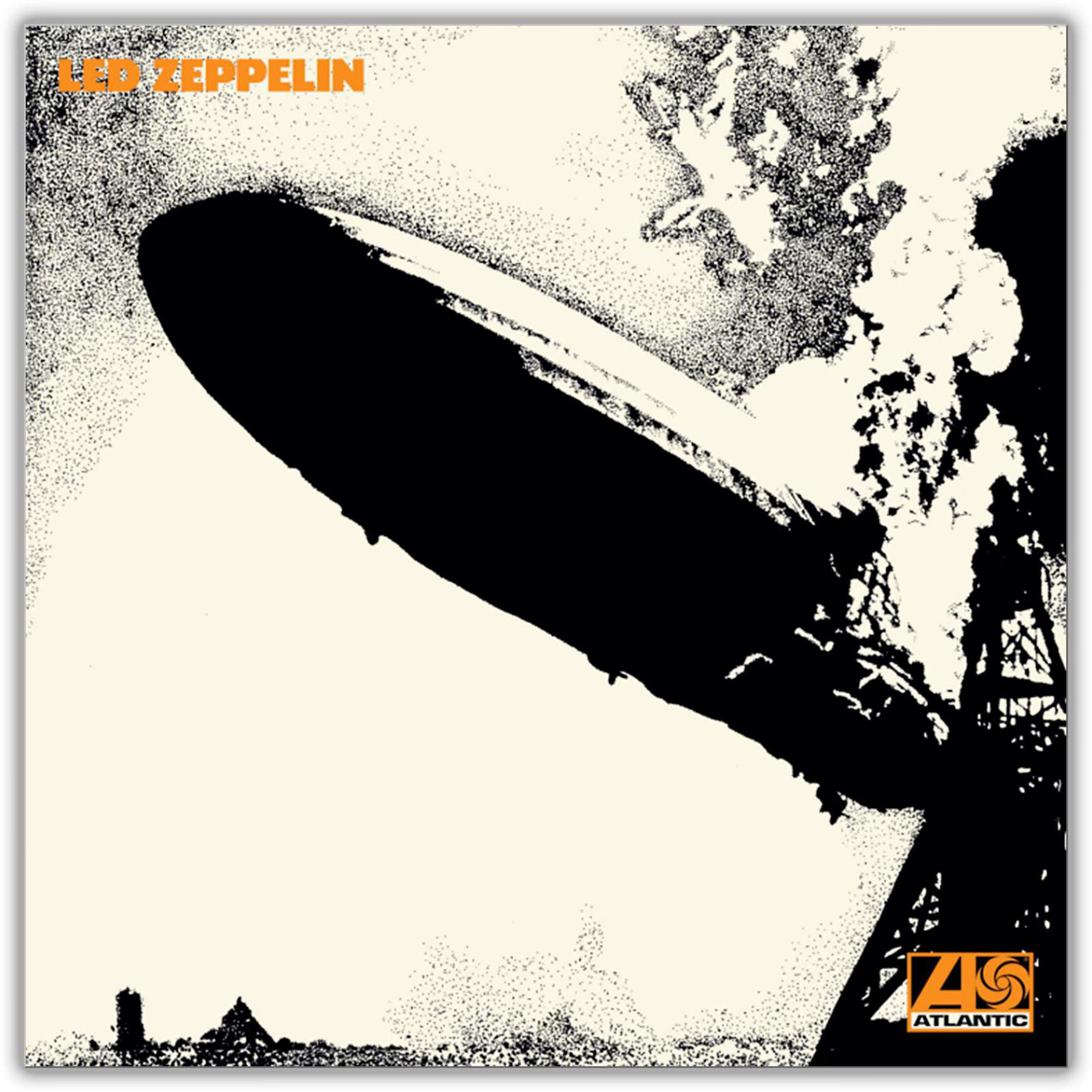
Hard to believe, after hosannas from the Rock and Roll Hall of Fame to the Kennedy Center Honors to the legions of subsequent bands, from Soundgarden to Guns N’ Roses and Greta Van Fleet formed in their image, but Led Zeppelin were definitely not cool at the height of their powers in the 1970s.
At least with a contingent of the mighty Baby Boom generation, of which, ironically, Jimmy Page and John Paul Jones, born in 1944 and 1946, respectively, and Robert Plant and John Bonham, both born 1948, were all members. These early-born Boomers—who comprised most of the musicians who would lead rock out of the 50s and into the progressive rock of the late 1960s and 1970s—also included prominent members of a newly minted cultural caste: the rock critic. And these critics were not at all happy when a huge, younger wave of late-born Boomers suddenly emerged in the ‘70s and delivered to staggering success and stardom bands that the critics, some of whom wielded considerable influence at the time, considered vulgar arrivistes.
As I discussed in What You Want Is in the Limo…
It is probably most realistic to consider the sixties and seventies a cultural continuum in which business begun in the sixties is concluded, however unsatisfactorily, in the seventies. And therein comes a moment when, by sheer momentum, the cultural detritus of the sixties—the peace and love and hash pipes, along with what David Crosby makes a fetish of calling “the Music”— comes hurtling into the seventies and into the laps of a generational cohort too young to parse the Kennedy assassination and Beatlemania but old enough to feel the gravitational pull of the counterculture and big brother’s Disraeli Gears and Surrealistic Pillow albums. This is is the audience, born in the late fifies and early sixties, that at the dawn of the seventies makes its appetites and buying power known and in the process radically reshapes the aesthetics and commercial scope of rock and popular music in ways still evident today.
The hunger among males of the cohort for rock— hard rock, rock as libidinou and priapic as they are—soon supercharges the record business but appalls the nascent rock-critical elite; in the real world of record sales, it is another story. Untold millions of suburban high schoolers from Shaker Heights to Syosset, Sherman Oaks to Barrington Hills, reach deep into the pockets of their fly-button 501s and commence buying stacks, cartons, shiploads of albums, pushing sales of recorded music to $47 million in 1973. And the band the rock-crit elite hate them the most for loving is Led Zeppelin.
“In 1973, in the collective mind of the critical clique, Led Zeppelin was not only not cool, they were distinctly uncool,” the record executive Danny Goldberg, the band’s press officer in 1973, would later recall. The disapproving critics toiling at Rolling Stone are ten years older than the average Zeppelin fans, whose sheer number and buying power render irrelevant whatever reservations self-anointed cultural gatekeepers have about the band.
Rolling Stone’s Jon Landau, dean of the rock-crit elite and later Bruce Springsteen’s manager, recalled:
“Zeppelin forced a revival of the distinction between popularity and quality. As long as the bands most admired aesthetically were also the bands most successful commercially (Cream, for instance) the distinction was irrelevant. But Zeppelin’s enormous commercial success, in spite of critical opposition, revealed the deep division in what was once thought to be a homogeneous audience.”
Or, as Goldberg observed, “Led Zeppelin was the first big group to make that slice of Baby Boomers feel mortal.” As a nonplussed rock writer bleated to Goldberg at Max’s Kansas City— the Elaine’s for the 1970s New York rock scene—after seeing Zeppelin in concert: “Their audience is so young.”
Led Zeppelin played its first shows in London in October 1968. The response was not encouraging; the few writers that Zeppelin manager Peter Grant could drag to the gigs complained that the playing was too loud, the material too derivative and discursive. Grant, having just toured America with the Jeff Beck Group, knew better. He’d seen the new generation of young American fans in action, not just in cities like New York but in the wretched provincial hamlets of the Midwest where the appetite for earsplitting blues-rock and guitar heroics was palpable.
Grant closed a deal with Atlantic Records for a five-year contract with a $200,000 advance. The Boomer rock-crit elite seized upon the huge sum as a club to beat the band for being a “hype,” in the argot of the day; in an irresistible but probably unwise rejoinder, Grant and Page responded by naming the concern publishing Zeppelin’s songs Superhype Music. It was the beginning of poisonous relations with the rock establishment that would plague the band throughout its career.
Grant meanwhile saw to it that Atlantic plied the emerging American FM rock stations with white-label copies of the album, where it received heavy airplay. The strategy bypassed the self-righteous rock press, forever after muting its influence on record sales. “When rock radio came along, the role of the rock critics was tremendously diminished,” Goldberg would recall. “Zeppelin’s first album was one of the first albums in the United States to break big over the airwaves rather than in the music press.”
Led Zeppelin was released on January 12, 1969. Rolling Stone weighed in with a devastating review that acknowledged Page’s guitar prowess but excoriated him as “a writer of weak, unimaginative songs” and flayed “prissy” Robert Plant for his “howled vocals.” The band and material were deemed “strained,” “unconvincing,” “foppish,” “redundant,” “monotonous,” and “very dull.” The musicians were stunned.
“We had appalling press at the time,” John Paul Jones later recalled. “In our naïveté we thought we’d done a good album, and then this venom comes flying out. After that we were very wary of the press.”
The critical lashings continue through Zeppelin’s next three releases, abating slightly with the untitled fourth album, which contained “Stairway to Heaven.”
In March 1973. Led Zeppelin is about to release their fifth album, Houses of the Holy, and embark on a sold-out tour of America, their ninth in five years. The album is the first to comprise entirely original material and breaks fresh stylistic ground with nods to reggae, raga, funk, even doowop, along with some of Page’s most labyrinthine arrangements. The tour and album are nothing less than the band’s bid for respect—also true stardom. After years of actively spurning the press, they now just as actively court it. It falls to Goldberg to conjure this particular rabbit. He concludes that “other than my closest friends, I knew I would get nowhere with the sixties rock critics. I could not think of anyone in the Max’s clique who would have both the stature and the inclination to transform Led Zeppelin’s image.”
As if on cue, Rolling Stone savages Houses of the Holy—one of 1973’s “dullest and most confusing albums”—and blithely libels Page’s masterpiece (“tripe like ‘Stairway to Heaven’ ”) while suggesting the band might more accurately call itself Limp Blimp.
The band can’t know it, but what waits around the corner is something far larger than cultural parity with the Rolling Stones. Stubbing out joints in high school parking lots across America, Zeppelin’s true constituents are about to get in touch with their kingmaking mojo. They clasp Led Zeppelin, and Houses of the Holy, to their bosom as fiercely as their older brothers and sisters embraced Axis: Bold as Love. The adolescent fantasies of a generation are about to collide with the ambitions and pretensions of a rock band fattened by unprecedented success but starving for respect and unambiguous stardom. It turns out they aren’t the only ones.
Zeppelin was never about ‘cool,’ which was a critic’s euphemism for needing a band to flatter their own boredom; it was about a million zonked-out high schoolers in parking lots, bong smoke leaking out of Novas and Pintos, discovering that wailing guitar solos and howling blond singers were infinitely preferable to the pieties of Crosby, Stills & Nash. The critics mistook their own impotence for taste, which is why every review reads like a bitter love letter to their own irrelevance.
As a precocious teenager in the 80s—when some truly appalling bands ruled the airwaves—I was always stumped by the notion that Zeppelin were some proto-Motley Crue or Poison. Yes, the lyrics were dumb but the music was astonishing. In that regard. my friends and I thought of the Who, the Stones, and Led Zeppelin as creative peers and a natural cohort. We loved Lou Reed, Iggy Pop, Black Flag, the Clash…and Led Zeppelin. The contradiction may have been obvious to the critics but it was completely lost on us.